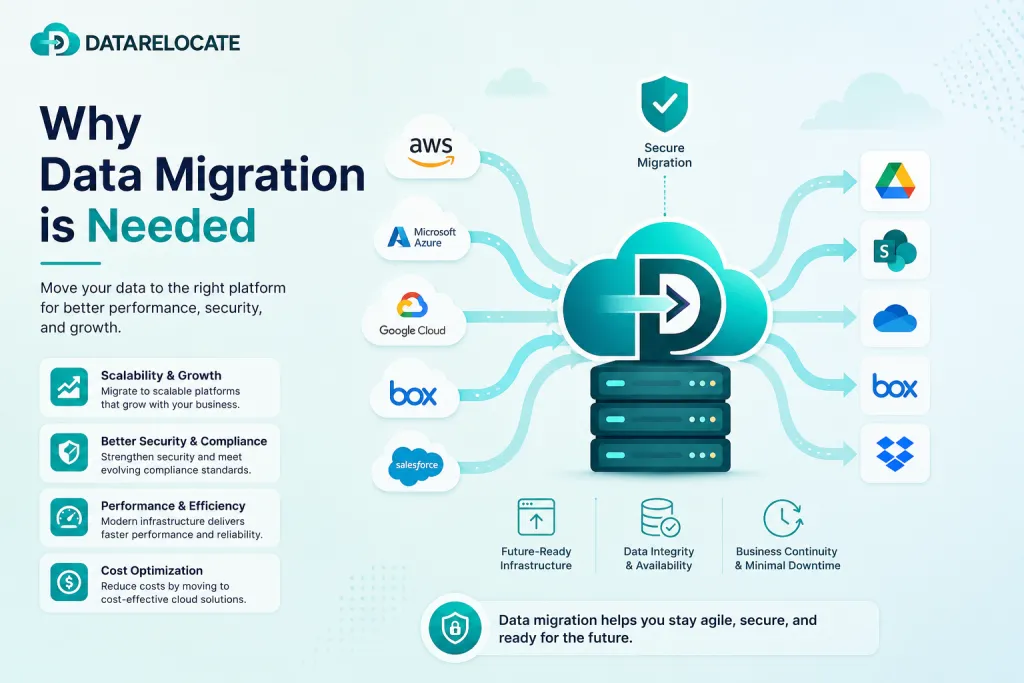
Data has become one of the most valuable assets for modern businesses. From customer records and emails to documents, applications, and collaboration platforms, organizations generate and manage massive amounts of information every day.
As technology continues to evolve, businesses must adapt to new systems, cloud platforms, and digital transformation initiatives. This is where data migration plays a crucial role.
What Is Data Migration?
Data migration is the process of transferring data from one system, application, storage platform, or cloud environment to another while maintaining its accuracy, security, and integrity. It involves carefully moving business-critical information such as files, emails, databases, user accounts, permissions, and metadata without disrupting daily operations.
Whether an organization is moving from on-premises infrastructure to the cloud or switching between cloud providers, data migration ensures that valuable information remains accessible and usable throughout the transition.
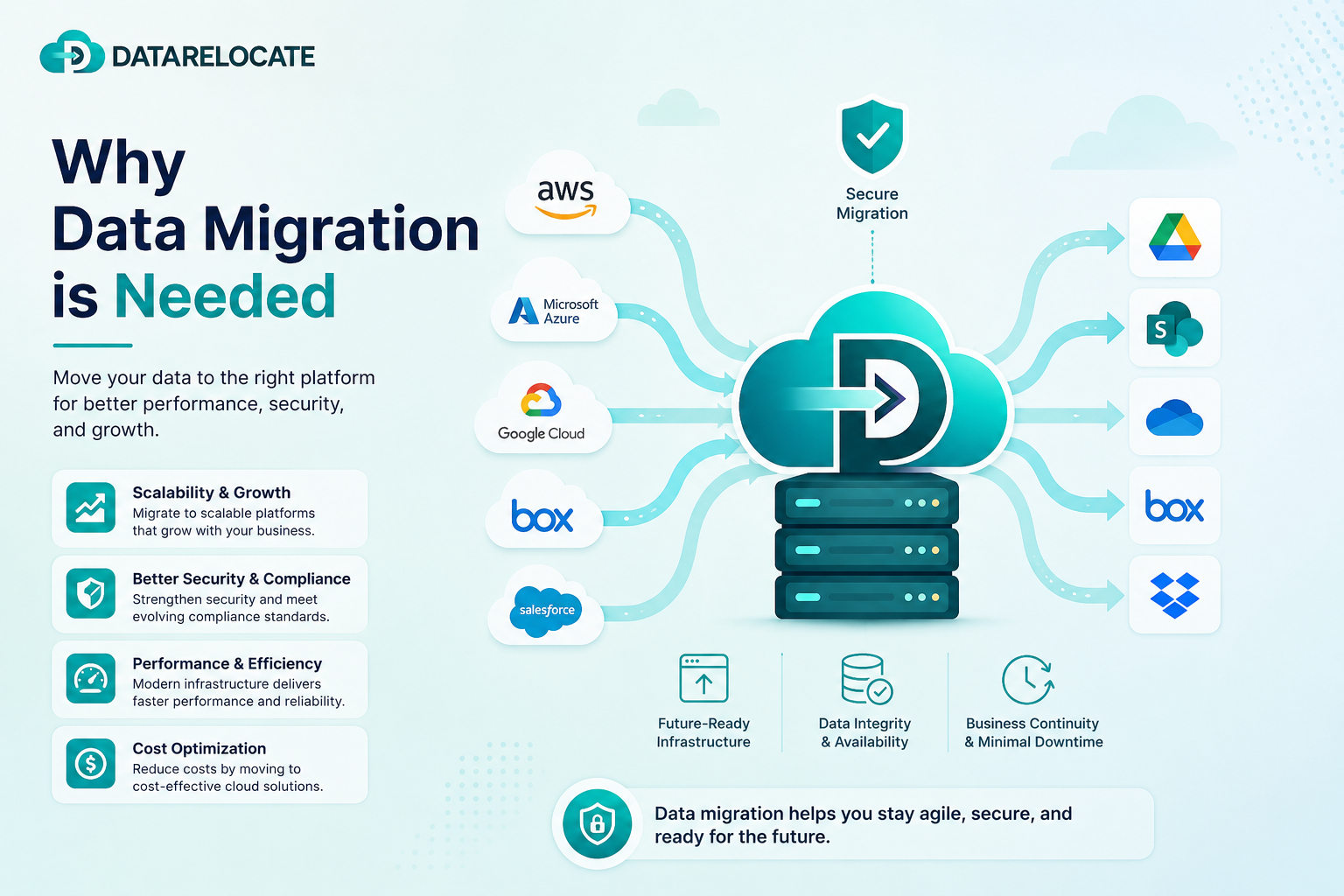
Explore Data Relocate migration services for content, email, and chat workloads across 50+ cloud platforms.
Why Is Data Migration Important Today?
Today’s businesses rely on fast, secure, and scalable digital environments. Legacy systems often struggle to meet growing business demands, making modernization a necessity rather than an option. Data migration enables organizations to upgrade their technology while preserving business continuity and minimizing operational disruptions.
Companies undertake data migration for several reasons:
- Cloud adoption and digital transformation
- Infrastructure modernization
- Mergers and acquisitions
- Application upgrades
- Data center consolidation
- Improved security and compliance
- Cost optimization
- Better collaboration and productivity
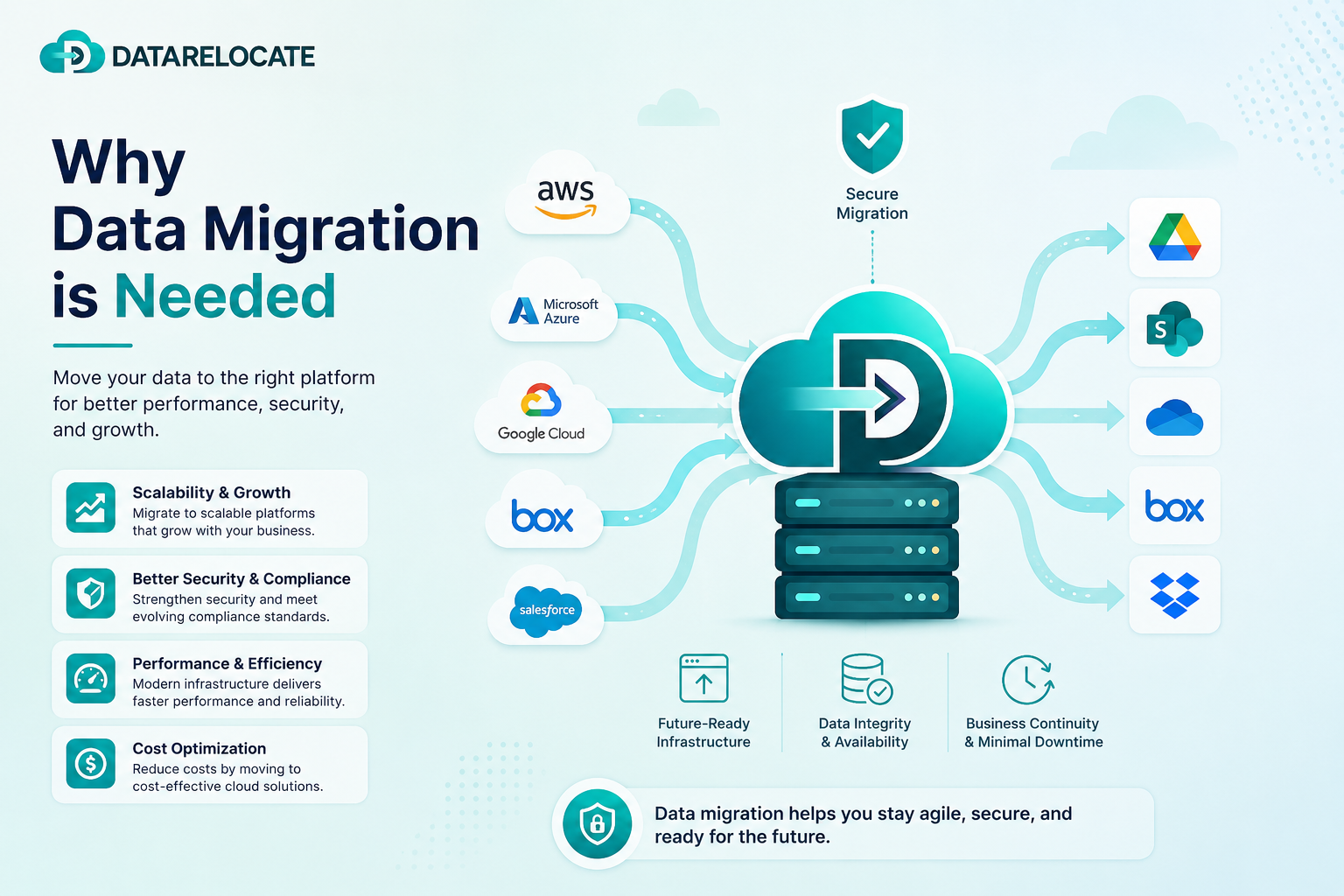
As organizations continue embracing cloud-based services such as Microsoft 365, Google Workspace, SharePoint, OneDrive, Dropbox, and Box, efficient data migration has become an essential part of IT strategy.
Benefits of Data Migration
A successful data migration provides significant advantages beyond simply moving information.
One of the biggest benefits is improved accessibility. Employees can securely access business data from anywhere, enabling remote work and seamless collaboration across global teams.
Migration also improves performance by replacing outdated infrastructure with modern cloud platforms that offer greater speed, scalability, and reliability. Businesses can reduce hardware maintenance costs while benefiting from automatic updates, enhanced security features, and built-in disaster recovery capabilities.
Additionally, data migration helps organizations maintain regulatory compliance by preserving permissions, metadata, audit logs, and retention policies where supported. This is especially important for industries handling sensitive customer or financial information.
Request a custom migration quote or review our pre-migration reports to plan delta windows before your first bulk pass.
Common Data Migration Challenges
Despite its advantages, data migration requires careful planning. Large data volumes, complex folder structures, permission mapping, unsupported file types, and system compatibility issues can make migrations challenging.
Organizations must also ensure minimal downtime, prevent data loss, and validate migrated content before decommissioning legacy systems. Using a reliable migration platform and following a structured migration plan significantly reduces these risks.
The Future of Data Migration
As businesses increasingly adopt artificial intelligence, cloud computing, and hybrid work environments, the need for efficient data migration will continue to grow. Organizations require flexible migration solutions that support multiple cloud providers, automate complex migration tasks, and ensure data integrity throughout the process.
Modern migration tools also offer incremental or delta migration, allowing newly created or modified data to be synchronized after the initial migration. This minimizes downtime and enables employees to continue working while data is being transferred.
Conclusion
In today’s fast-paced digital world, data migration is no longer a one-time IT project—it is a strategic business initiative. It enables organizations to modernize their technology, improve collaboration, strengthen security, and support long-term growth. By adopting a well-planned migration strategy and leveraging reliable migration tools, businesses can confidently move their critical data to modern platforms while ensuring continuity, compliance, and operational efficiency. As technology continues to evolve, effective data migration will remain a key driver of business success.