
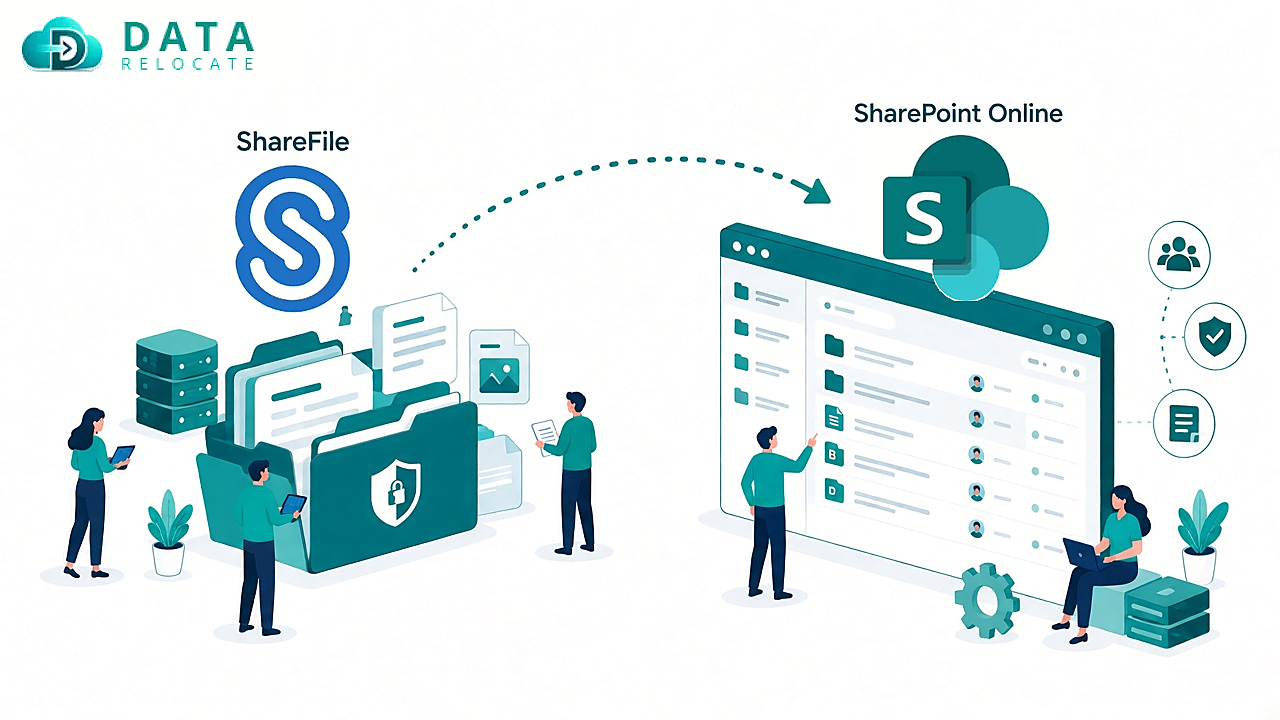
Data Relocate helps IT teams run a controlled ShareFile to SharePoint Online migration when company files must move into Microsoft 365 document libraries.
- One-Time Migration and Delta Sync
- Root and inner Folder permission Migration
- Version history, File Comments and Metadata Migration
- Timestamp Preservation
- External Collaborator Permissions Migration
Introduction
ShareFile is widely used by businesses for secure file sharing, document collaboration, and content management. However, organizations adopting Microsoft 365 may want to consolidate their business documents into SharePoint Online.
SharePoint Online provides centralized document libraries, collaboration capabilities, and integration with Microsoft 365 applications such as Microsoft Teams and OneDrive for Business.
Migrating ShareFile content into SharePoint Online can help organizations establish a centralized content environment while supporting their broader Microsoft 365 adoption strategy.
A successful migration requires careful planning, assessment of source content, destination configuration, and validation of migrated files.
Using DataRelocate, businesses can plan and execute their ShareFile to SharePoint Online migration through a structured cloud content migration workflow.
ShareFile vs SharePoint Online: Understanding the differences
A clean migration starts with the data model. ShareFile is a folder account. SharePoint Online is a set of sites, and each site holds document libraries. A document library is the container SharePoint uses for files.
| Feature | ShareFile | SharePoint Online |
|---|---|---|
| Business file storage | Personal folders and shared folders in one account | Sites and document libraries in a Microsoft 365 tenant |
| Permissions | View, Download, Upload, Delete, and Admin on folders | Roles such as Read, Edit, and Full Control, plus inheritance |
| Nested access | Subfolders can have their own permissions | Unique permissions break inheritance. Recommended general limit: 5,000 unique scopes per library. Supported limit: 50,000 |
| Document sharing | View or download links. The default link points at the latest version | Anyone, organization, or specific-people links. The tenant and the site must allow that level |
| External people | Client users on the ShareFile account | Microsoft 365 guests. Microsoft does not set a separate guest-count cap on a site. Sharing policy still controls invites |
| Versions | Unlimited by default. Admins can cap versions per folder. Each version uses ShareFile storage | Service maximum: 50,000 major versions. New libraries inherit an organization cap. A documented manual default is 500 major versions with no expiration |
| File and path limits | Account storage and folder rules | 250 GB per file. The decoded path, including the file name, cannot exceed 400 characters |
| Large containers | Nested folders under the account, with no site boundary | Up to 30 million items per library. You cannot break inheritance on a folder that already has more than 100,000 items |
| Extras | Portals, projects, tasks, workflows, signatures, file requests, storage zones | Pages, lists, Teams-connected sites, retention, and sensitivity labels |
| Admin | ShareFile account admin | SharePoint admin center and site owners |
Common Challenges when Migrating ShareFile to SharePoint Online
| Potential challenges | Solution |
|---|---|
| One large ShareFile tree does not match your sites | Design libraries first. Map folders to sites before the production job |
| ShareFile rights do not equal SharePoint roles | Pilot a folder and compare view, edit, and delete access |
| Client users are not Microsoft 365 guests yet | Create or invite guests and turn on the external sharing level the site needs |
| File names or paths that SharePoint rejects | Rename blocked characters and shorten paths that would pass 400 characters |
| More versions than the library keeps | Raise the library version limit before the job if you need the full history |
| Too many unique permissions | Group access where you can. Stay near the 5,000 recommended unique-permission range |
| Personal folders mixed into the shared tree | Send personal files to OneDrive. Keep shared work on this SharePoint path |
| People keep editing during the first pass | Run One-Time Migration, then Delta Sync, then a planned cutover |
| Old ShareFile links in emails and documents | Plan a redirect or a notice. Those addresses are not rewritten |
| The destination slows under heavy transfer | Throttling means SharePoint pauses or slows requests when volume is high. Use batches |
Steps to Migrate ShareFile to SharePoint Online using Data Relocate
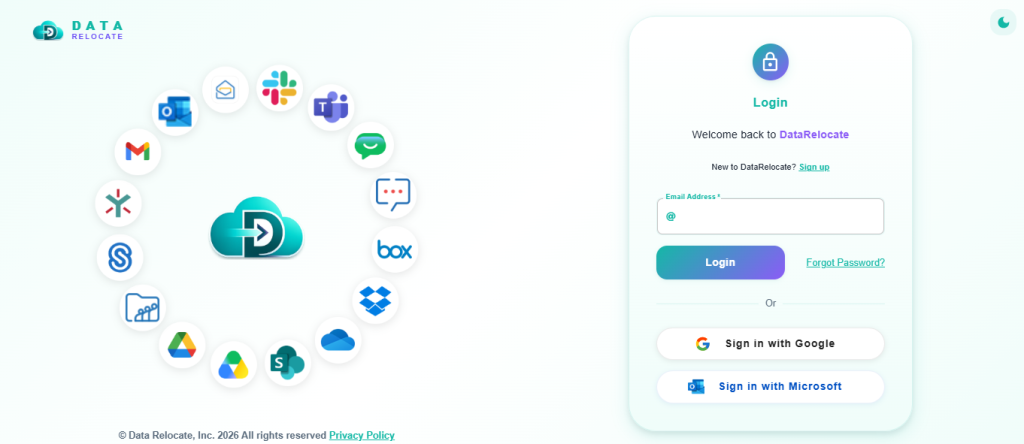
Step 1: Log into Data Relocate
Sign up or log into Data Relocate. Request a quote from Pricing and get a Statement of Work (SOW) for this ShareFile to SharePoint Online project.
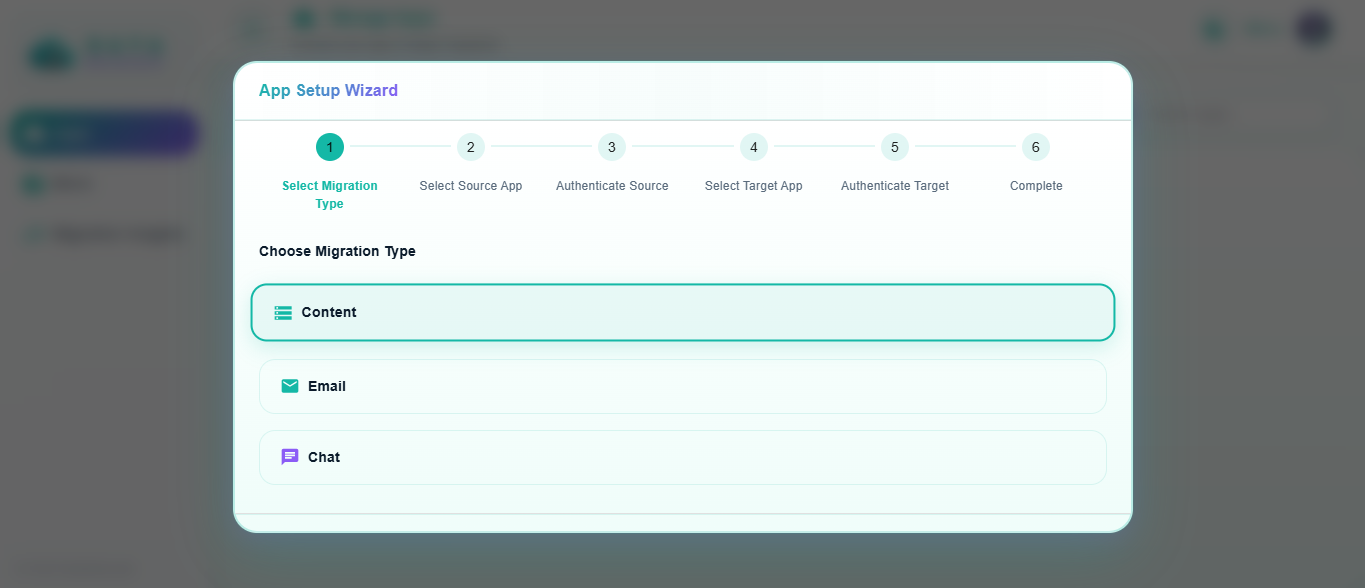
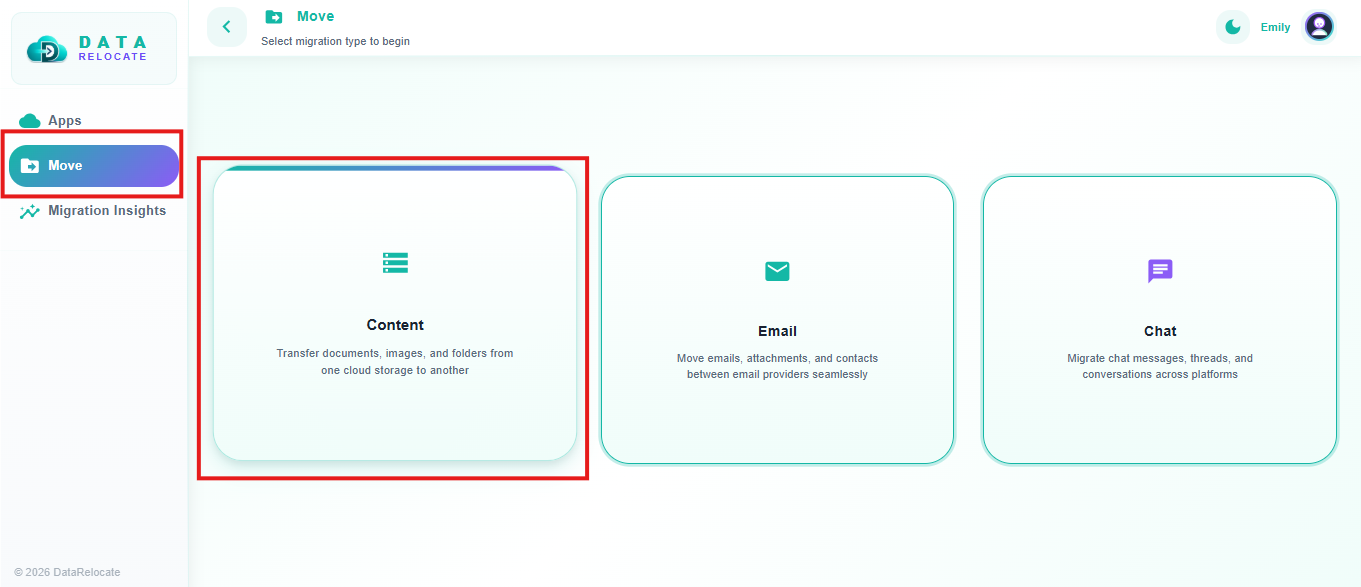
Step 2: Select Migration type
Choose Content as the migration type for ShareFile to SharePoint Online Migration. This job moves documents, files and folders from one cloud storage to another.
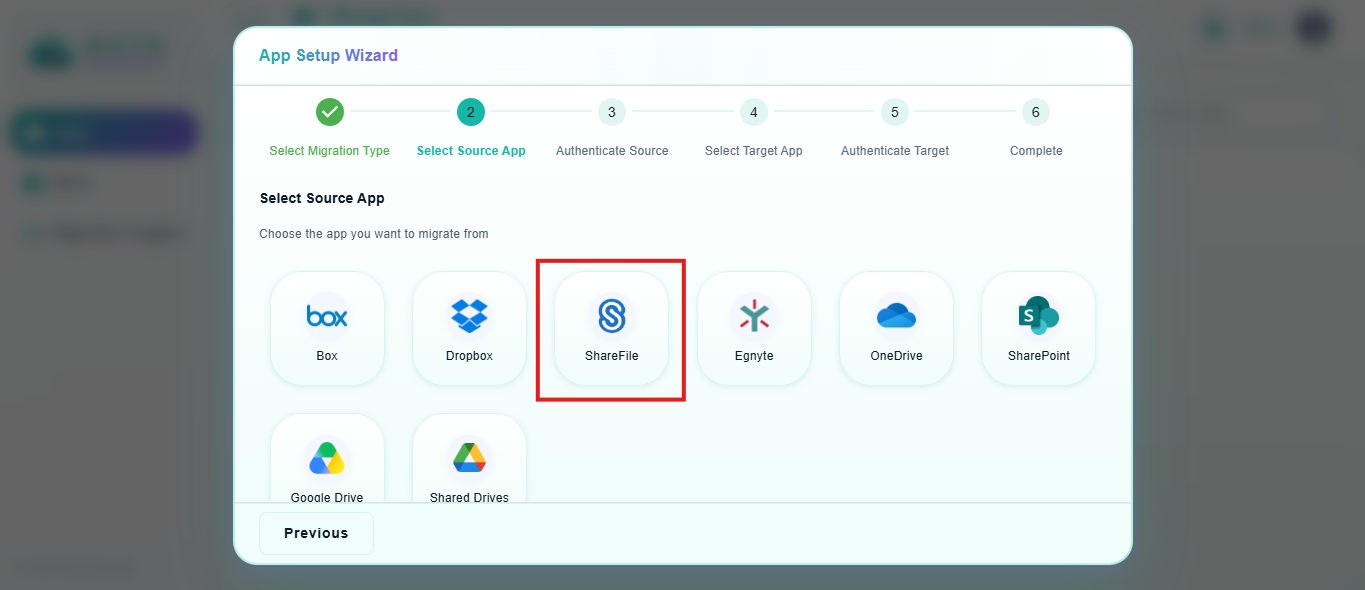
Step 3: Add ShareFile as the Source
Select ShareFile as the source and start the connection.
Step 4: Authenticate ShareFile
Complete authorization by providing domain and admin credentials for the ShareFile account. Data Relocate authorizes access without storing user passwords.
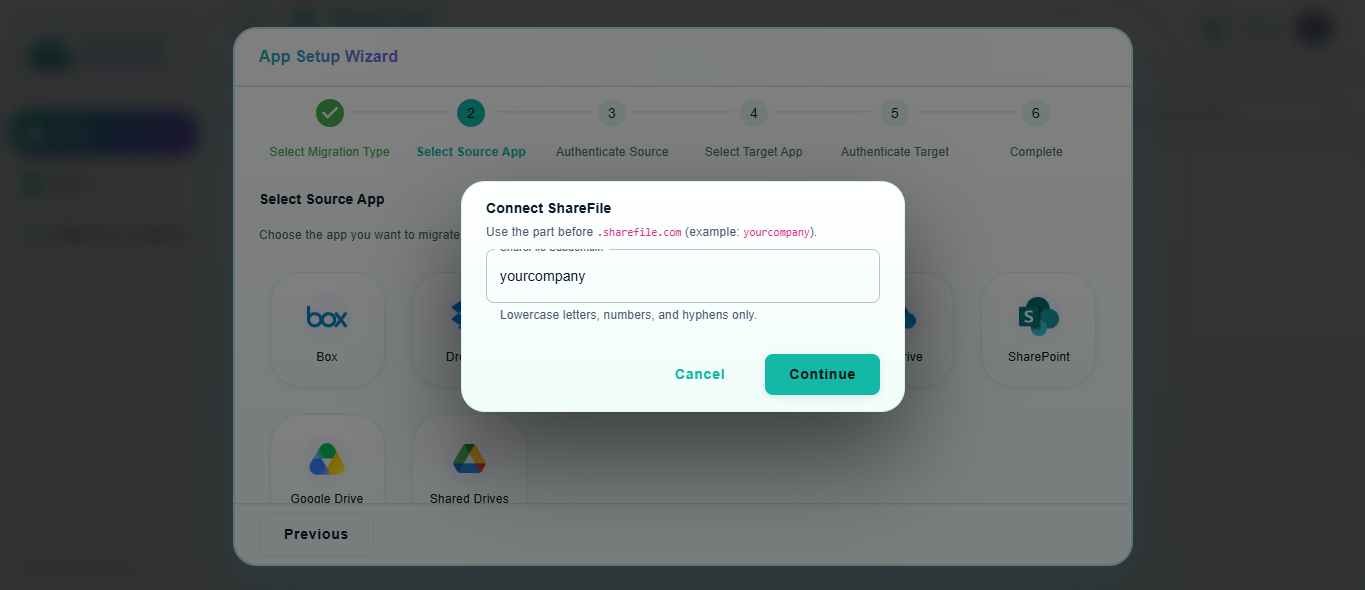
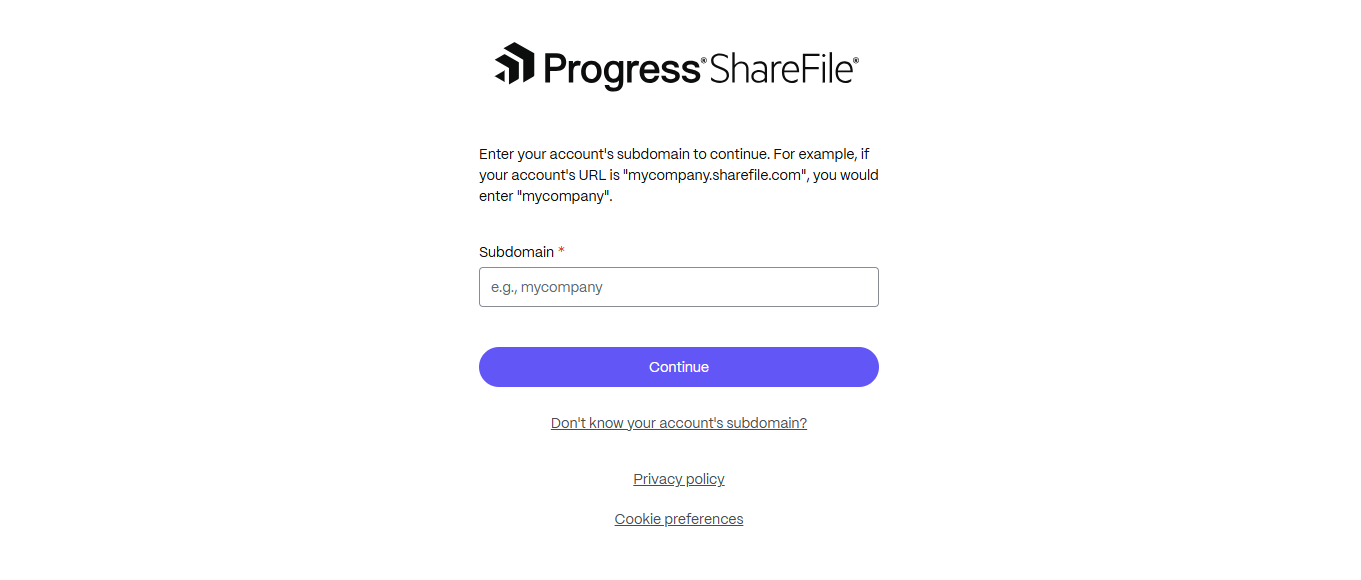
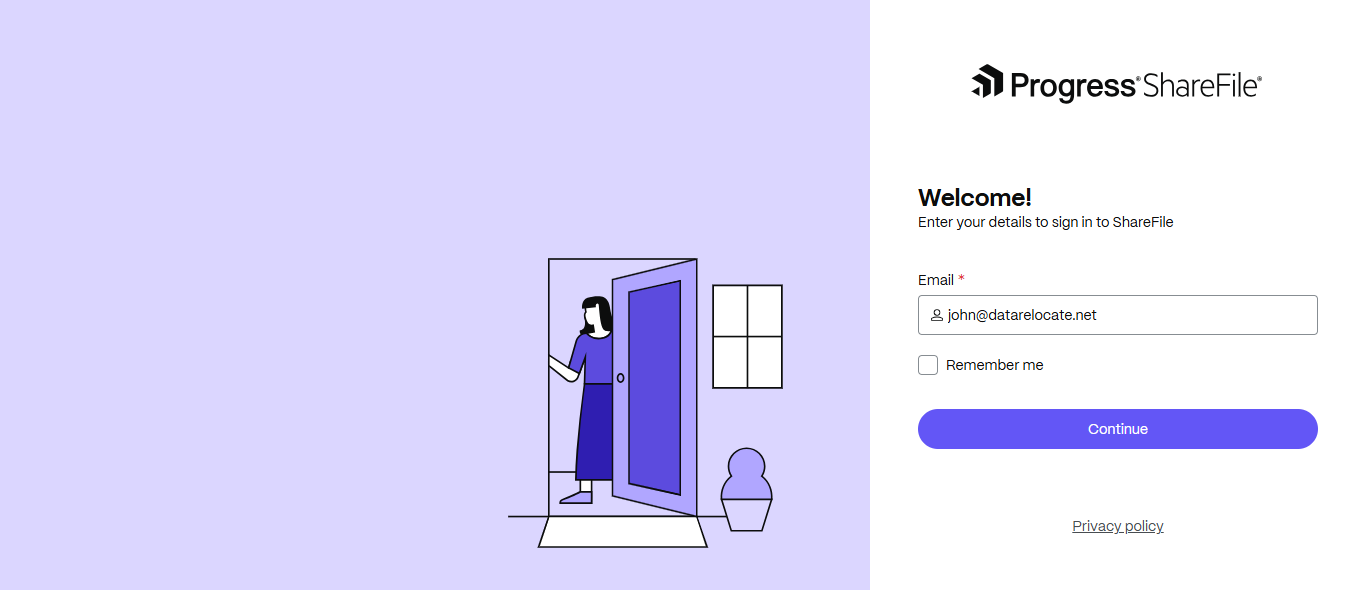

Step 5: Add SharePoint Online as the Target
Select SharePoint Online as the target and start the Microsoft 365 connection.
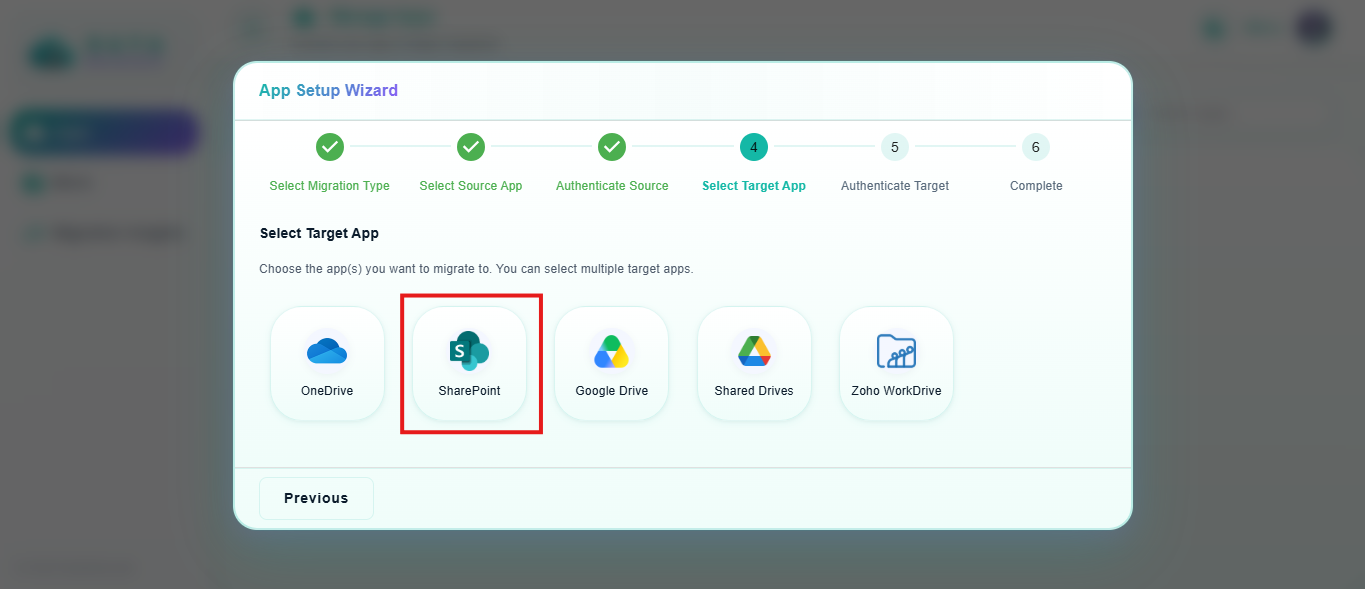
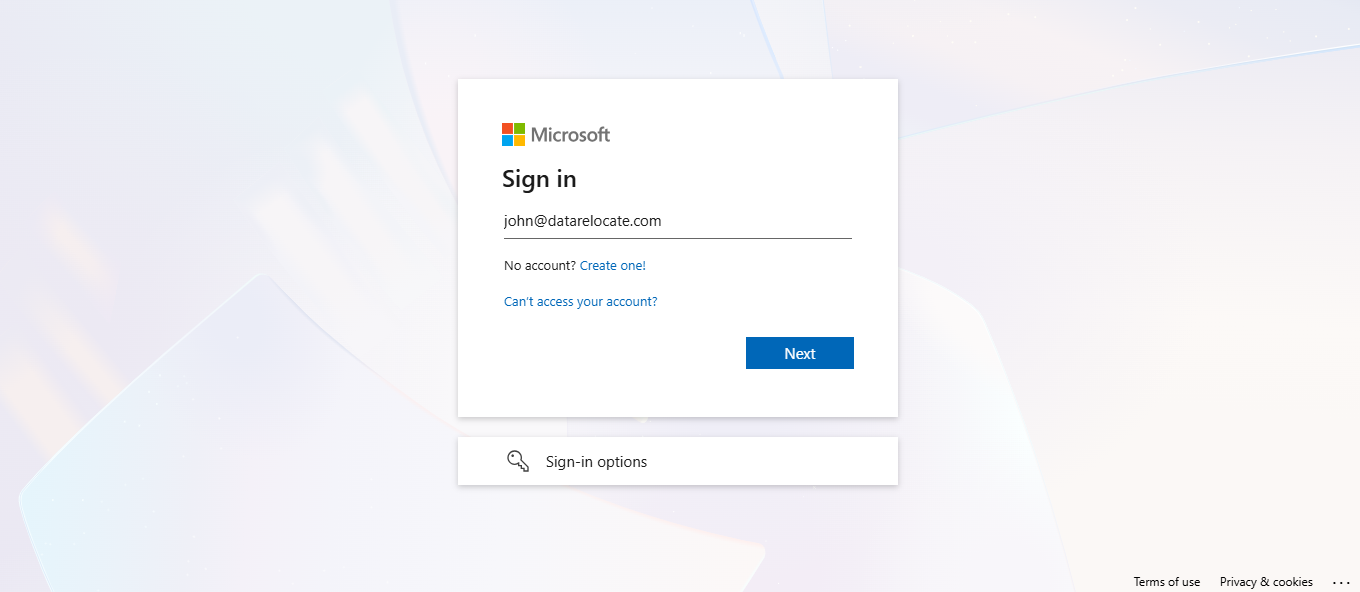
Step 6: Authenticate SharePoint Online
Finish target authorization for the tenant that owns the target sites.
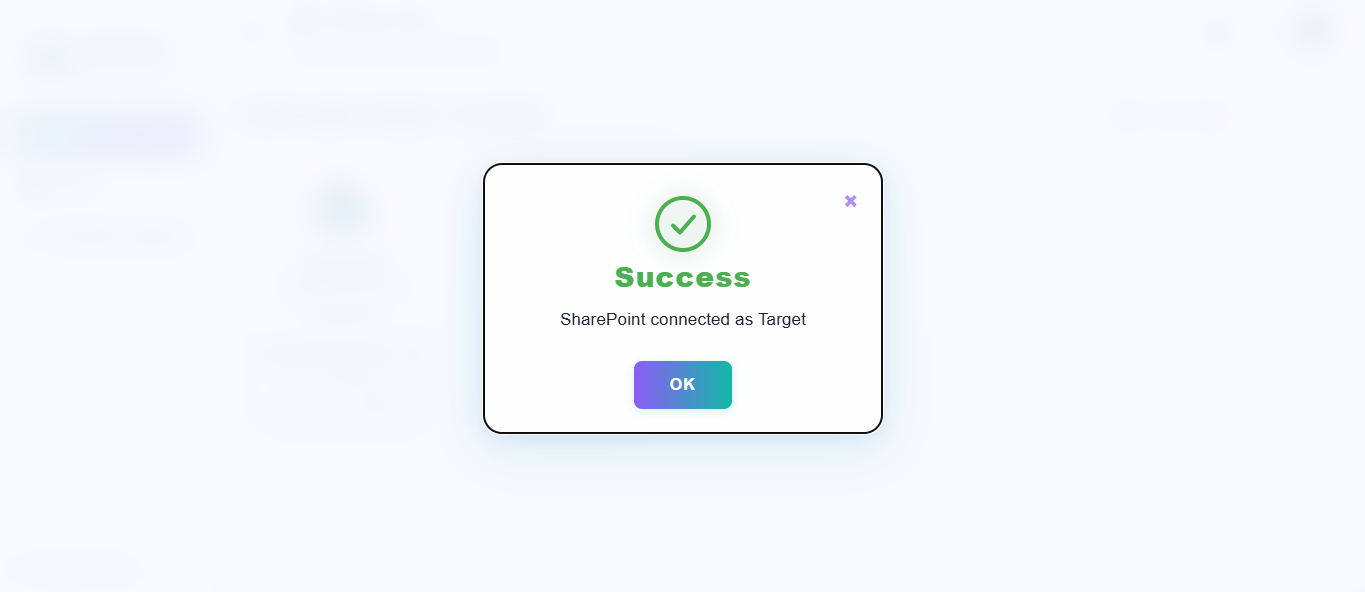
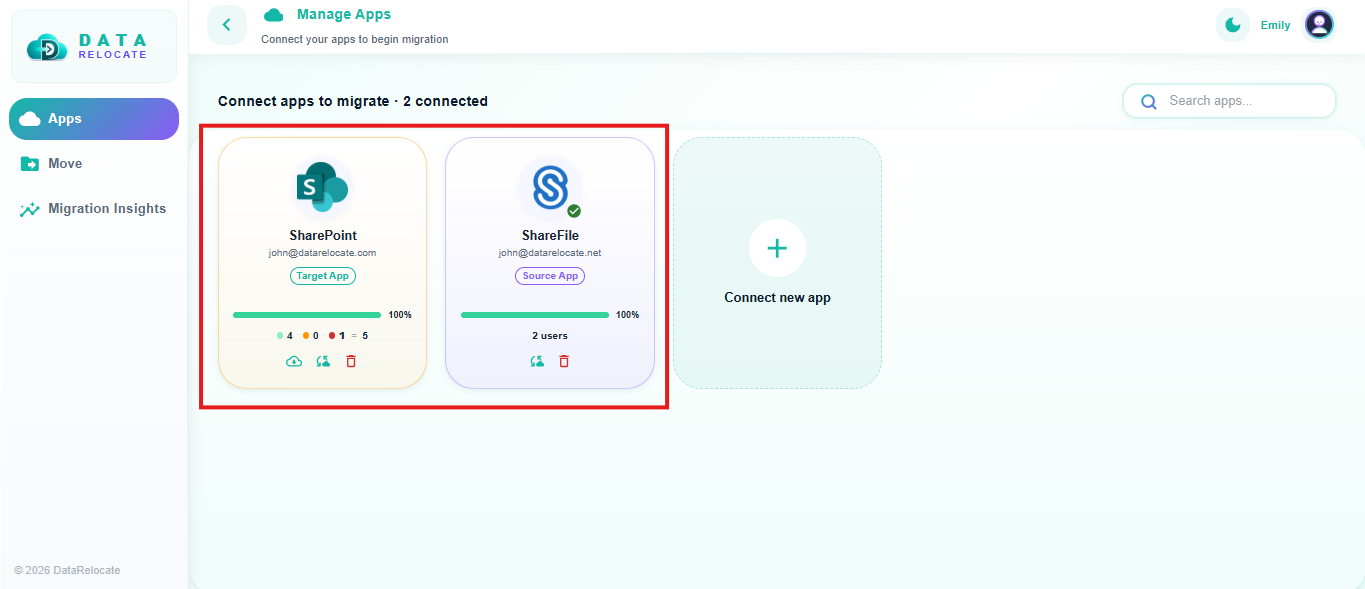
Step 7: Confirm Source and Target for the job
Set ShareFile as the source and SharePoint Online as the target. Confirm the pair matches the SOW before you map folders.
Step 8: Map Source and TargetPpairs
Map ShareFile folders and users to the SharePoint sites and libraries in your plan. Data Relocate supports CSV mapping. Upload folder mapping in CSV by downloading the provided sample template.
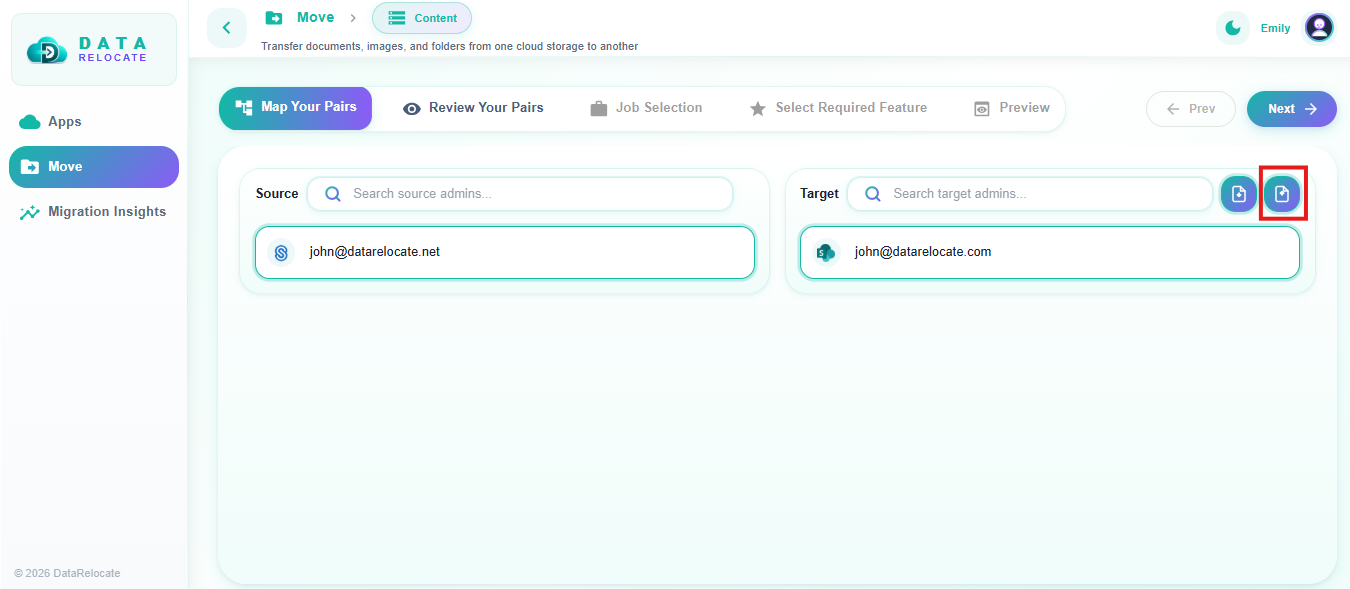
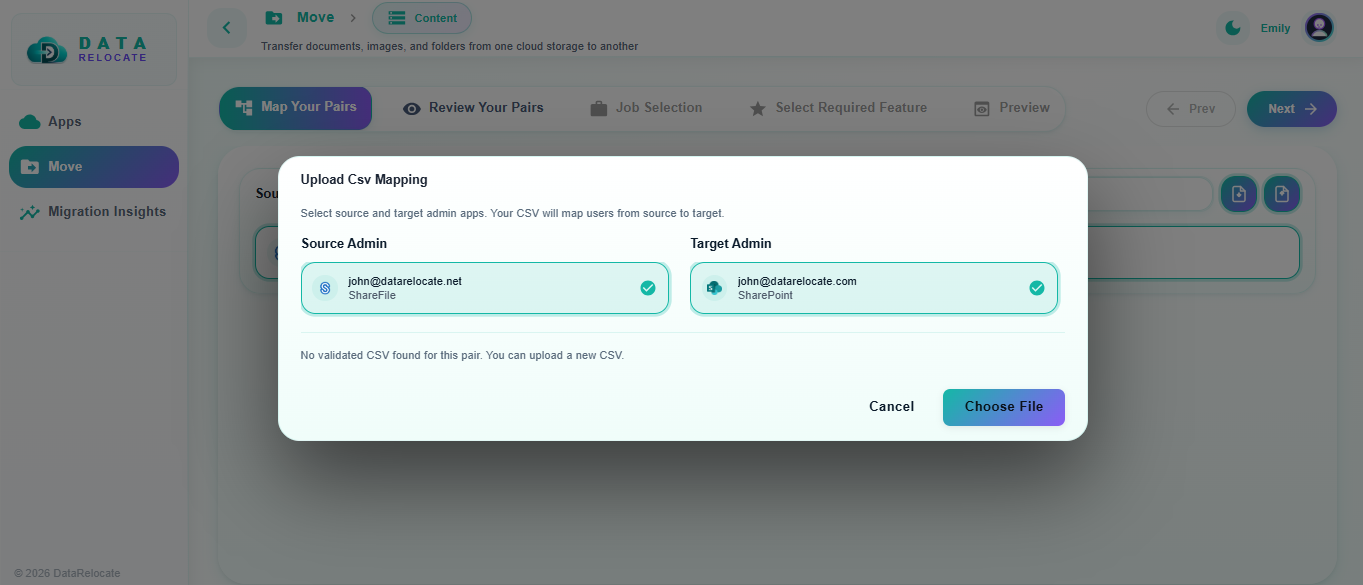
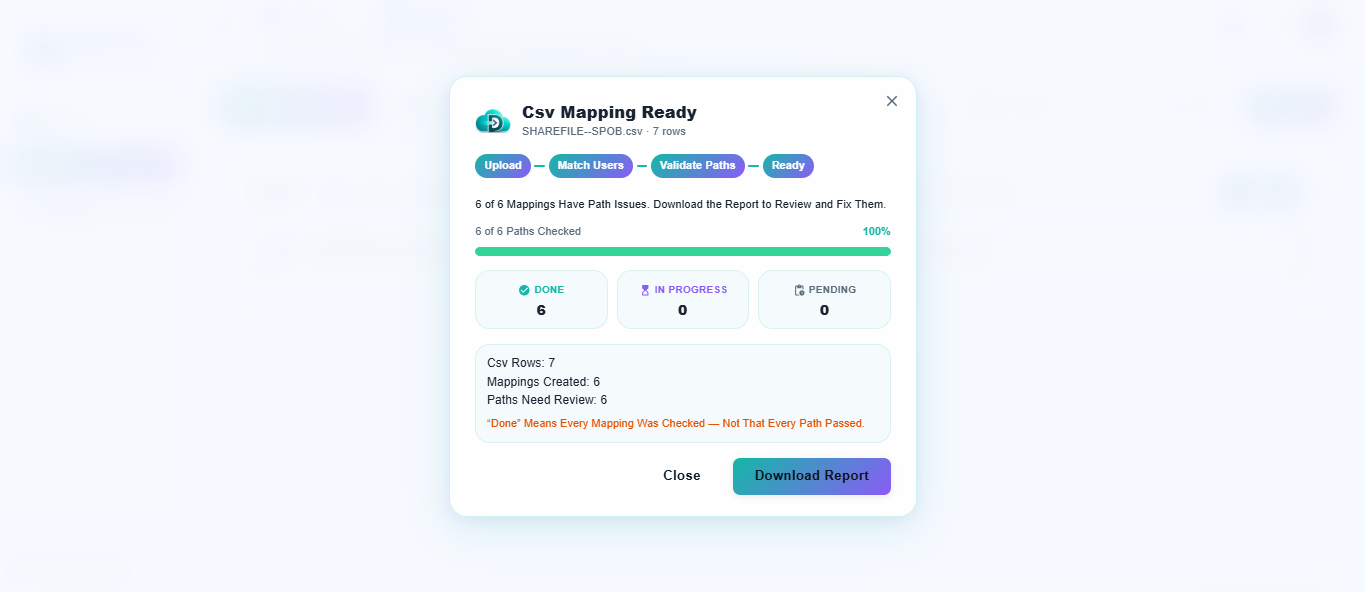
Step 9: Review selected pairs
Review every source-to-target pair. Download the mapping CSV if you need a second check. Correct mistakes before you continue.
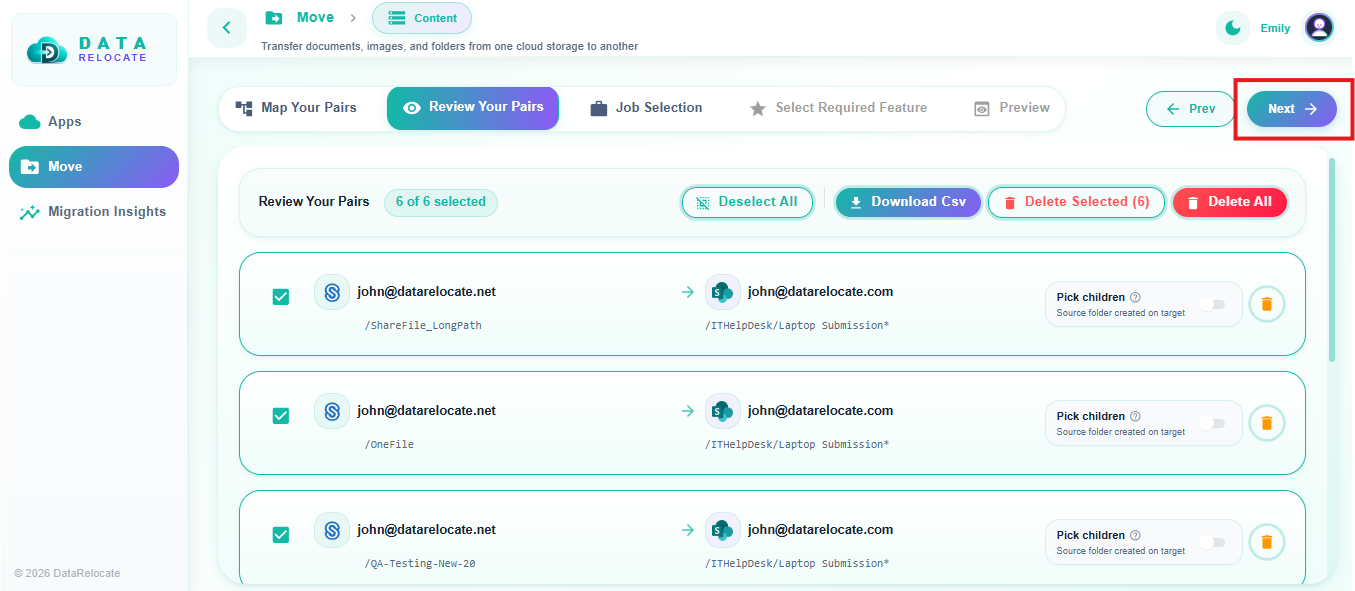
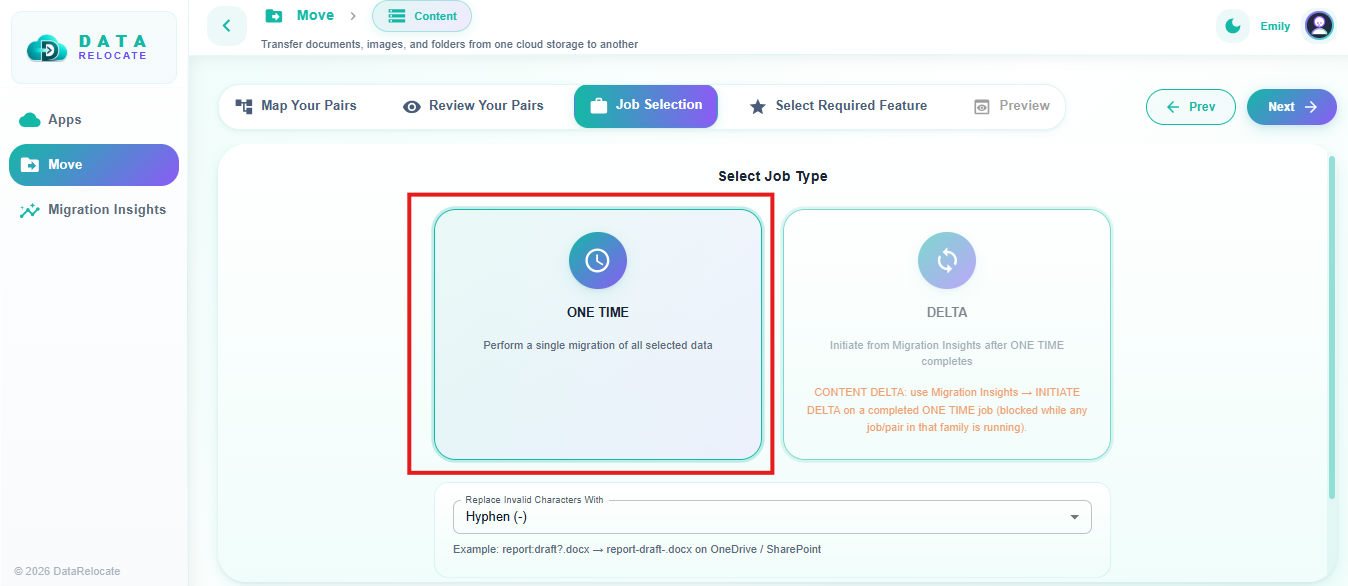
Step 10: Select Migration Job type
Choose One-Time Migration for the first pass. Run Delta Sync later for files and permission changes made after that pass.
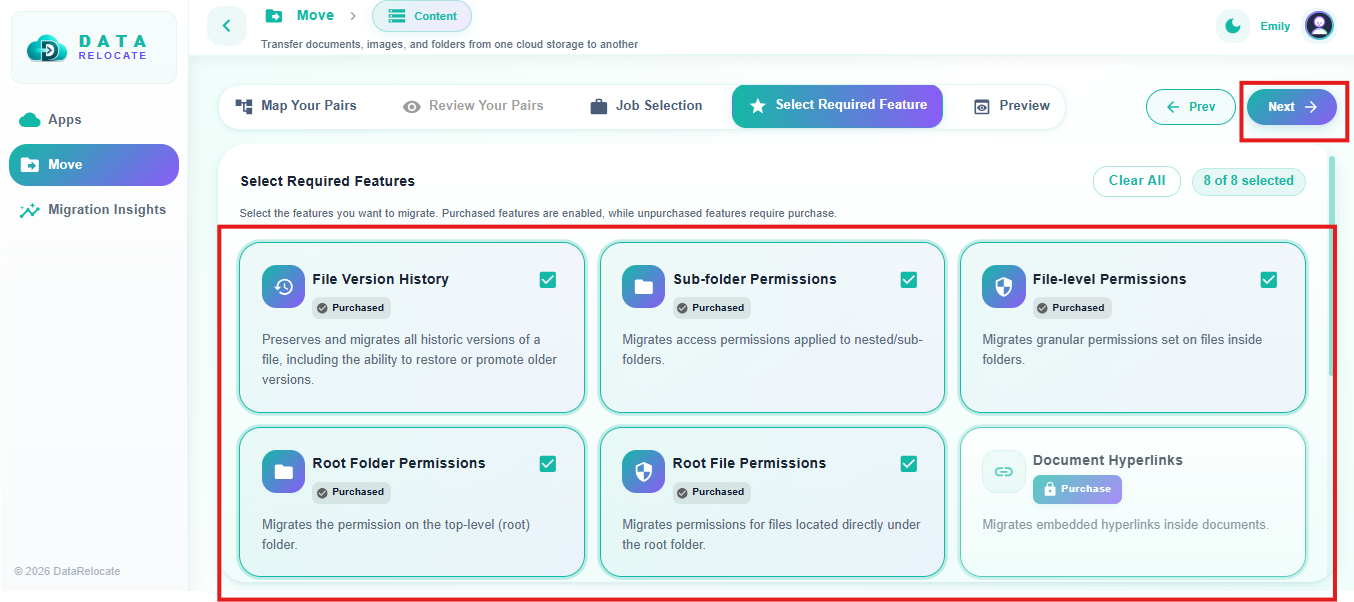
Step 11: Select Required Features
Using the SOW, select the scopes for this job. Typical scopes are files, folders, versions, permissions, shared links, comments, and metadata.
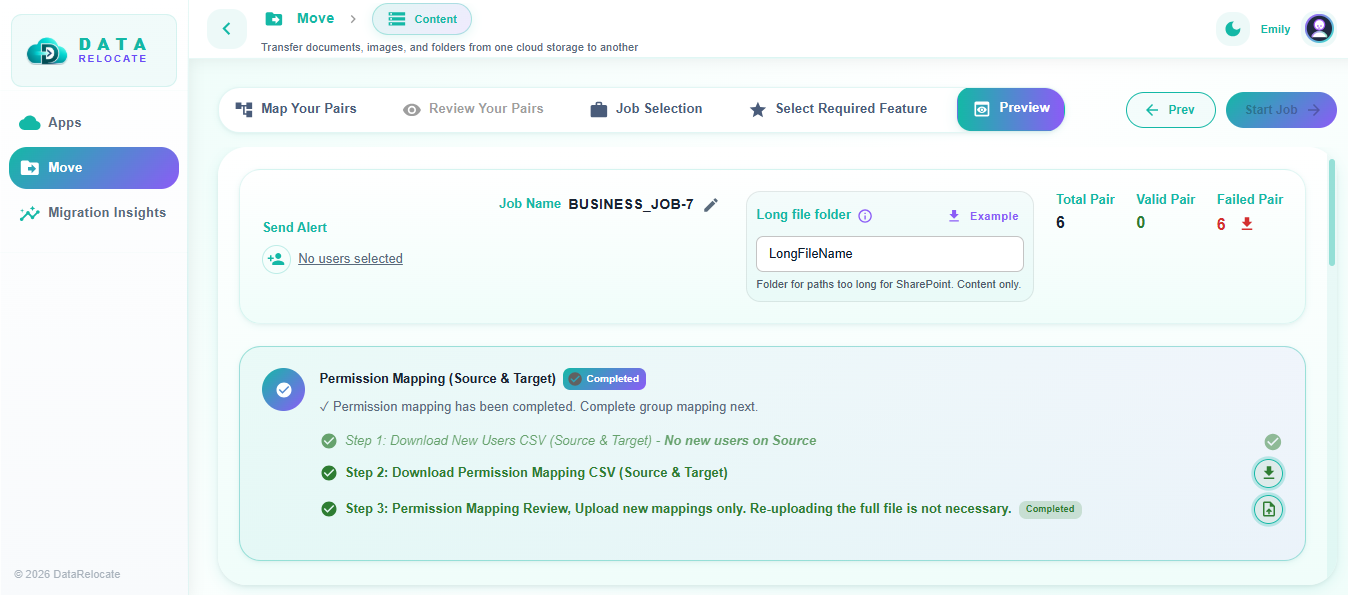
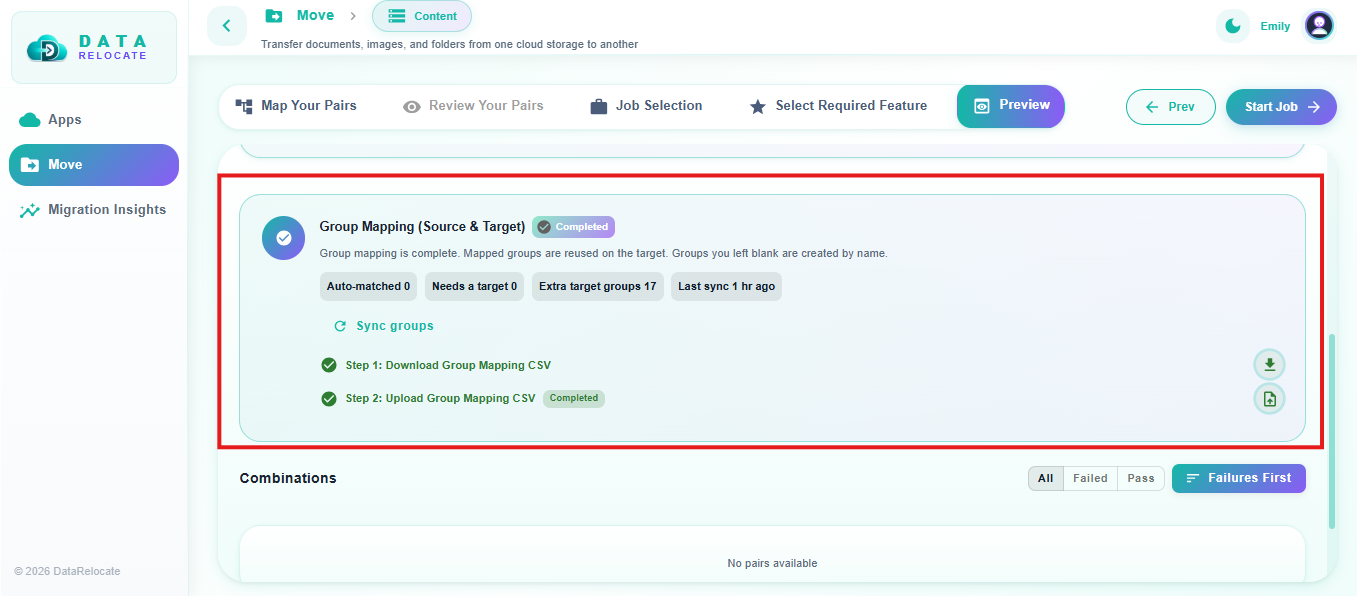
Step 12: Preview Stage
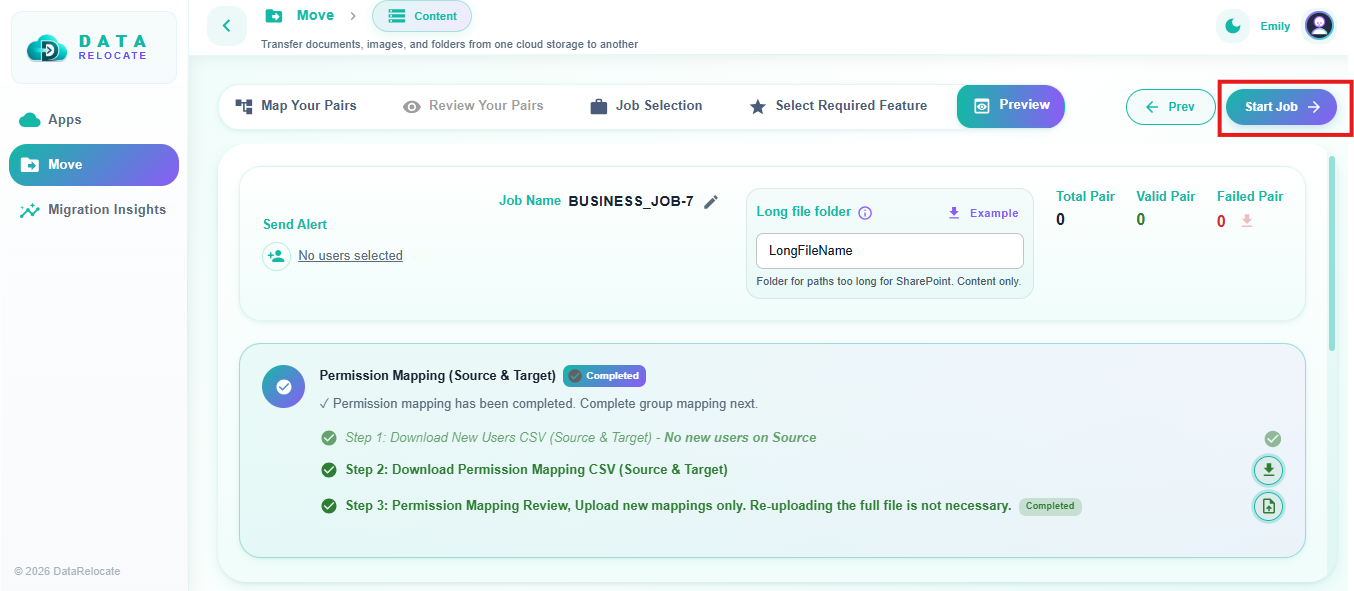
Use Preview to check the mapping before production. Confirm the CSV. A wrong library mapping is hard to unwind after files land.
Step 13: Start the Migration Job
When preview succeeds, start the job in Data Relocate.
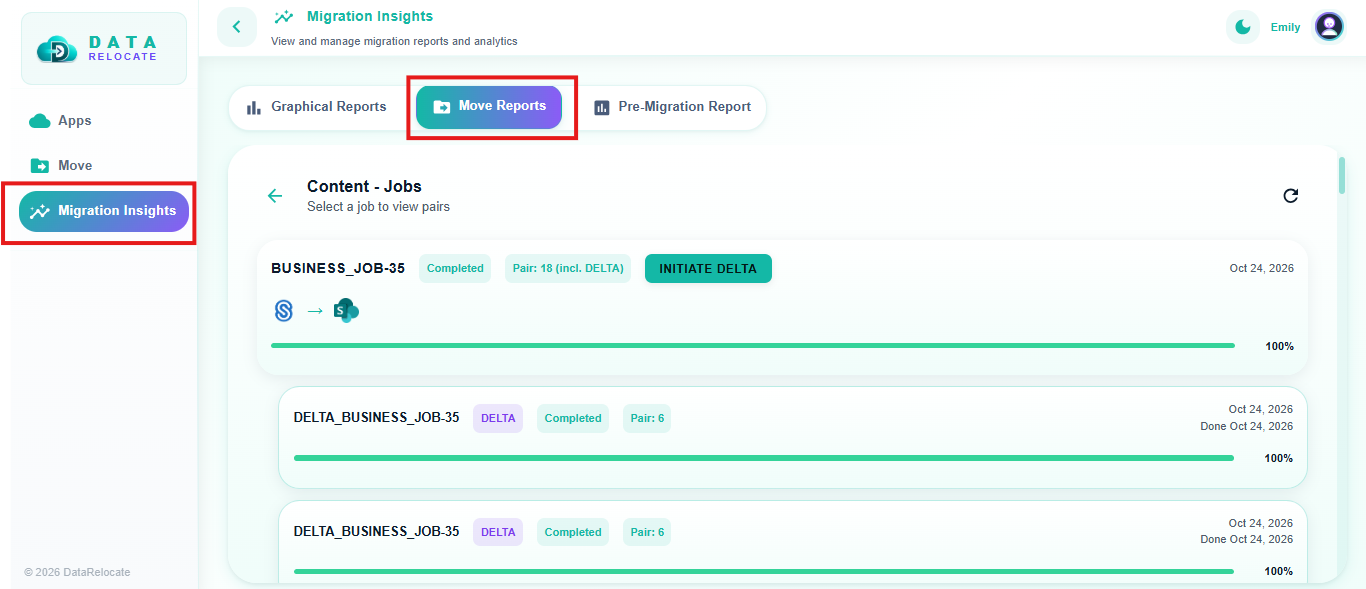
Step 14: Monitor Migration Insights
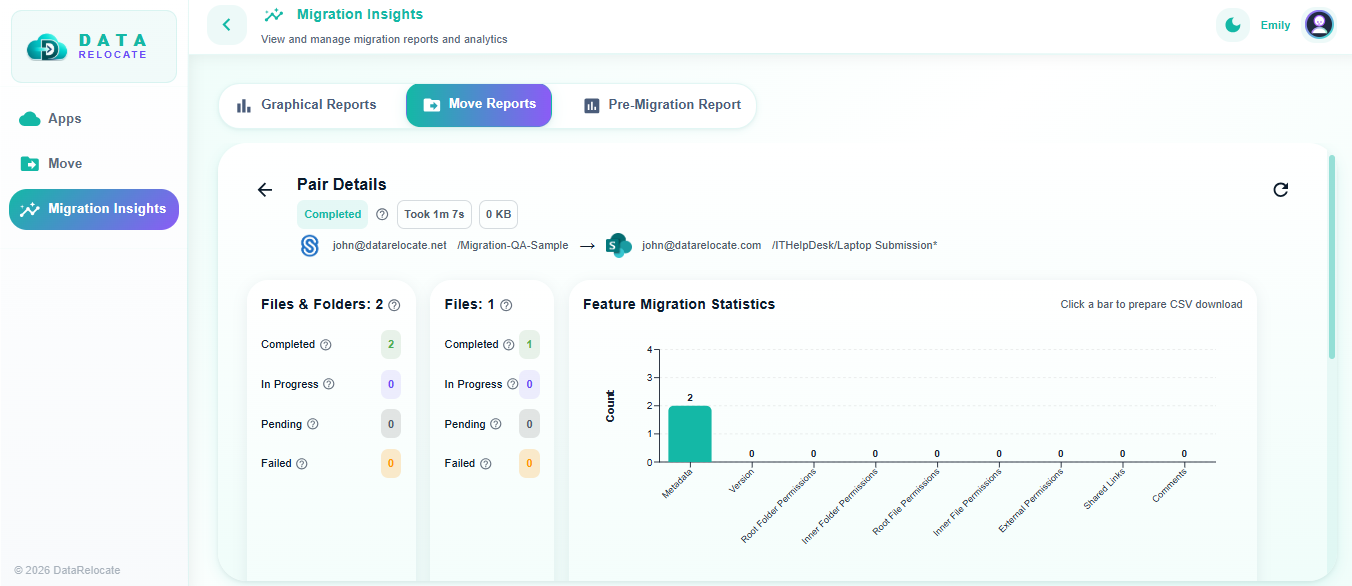
Use Migration Insights to track total, in-progress, completed, and failed items. Download the reports. Fix failed paths, then decide if the batch is ready for Delta Sync.
Post-migration validations
Validate before you call the wave done.
1. Migration report validation
Review each batch. Compare completed items with warnings and failures. Note skipped files, start time, and finish time. Clear problem folders before sign-off.
2. File and version validation
Open sample files from the top of a tree and from a deep folder. Compare size, name, and version count with ShareFile. If the library cap is lower than the source history, older versions stop at that cap.
3. Folder structure validation
Walk the mapped library. Confirm parent and child folders match the map. Look for folders that landed in the wrong site.
4. Permission validation
For each test user, check view, edit, and delete. Include one internal user and one external client. Confirm a restricted child folder still differs from its parent.
5. Sharing and link validation
Open a migrated sharing link as the intended audience. Confirm an anyone-link was not created on a site that should stay private. Treat old ShareFile URLs as a separate cutover task.
6. Delta Sync validation
After the final Delta Sync, add a test file in ShareFile and confirm it appears in the library. Repeat the check for one permission change on the source.
7. User access validation
Have a site member open the library in a browser and in the sync client if you use one. Microsoft recommends keeping a synced library near or below 300,000 files for day-to-day sync.
8. Security and policy validation
Rebuild retention, sensitivity labels, and sharing policy in Microsoft 365. ShareFile settings do not become those controls. Remove ShareFile access only after this check and the cutover notice.
Best practices for ShareFile to SharePoint Online migration
- Finish the site and library map before the first production job.
- Pilot a deep folder, a long version history, and one external client.
- Invite guests and set site sharing before you migrate links.
- Clean blocked file names, paths over 400 characters, and files over 250 GB first.
- Raise the library version cap when the ShareFile history must be kept.
- Keep personal folders on the OneDrive path.
- Run One-Time Migration, then Delta Sync, before you tell users to leave ShareFile.
- Save Migration Insights reports for failed items and for audit.
Plan your ShareFile to SharePoint Online move with Data Relocate
Use this checklist with IT and the site owners before you lock a cutover date.
Data Relocate moves ShareFile files into SharePoint Online with One-Time Migration, Delta Sync, preview, and Migration Insights. Review the ShareFile to SharePoint Online migration solution for this path. If other libraries move in the same program, start from content migration. Use Pricing when you are ready for a quote.
Share folder counts, the library map, SOW scope, and target dates so the quote matches the sites you will use.
Frequently Asked Questions
How long does a ShareFile to SharePoint Online migration take?
It follows file count, version depth, and SharePoint throttling. Time the pilot library. That number is a better estimate than a generic schedule.
Can people keep working in ShareFile during the migration?
Yes during the first pass. They should keep saving in ShareFile until you announce cutover. Delta Sync copies what they added after that pass.
Will the ShareFile folder tree look the same in SharePoint?
The folder hierarchy moves into the library you mapped. The account does not stay one tree. It becomes the sites in your map.
Do ShareFile permissions match SharePoint roles?
Permissions are in scope. SharePoint stores them as roles and inheritance, not as the five ShareFile switches. Compare view, edit, and delete on the pilot folder before the rest of the account.
What happens to external clients?
Invite them as Microsoft 365 guests first, and allow external sharing on the site. A ShareFile client login does not become a Microsoft 365 account on its own.
Should personal ShareFile folders go to SharePoint?
Only when you intend them to be team content. Otherwise send them through the OneDrive path. A team site is a poor home for personal files.
Are all file versions migrated?
Version history is supported on this path. SharePoint keeps versions only up to the library cap. Set that cap before the job if the history matters.
What is Delta Sync for on a file migration?
It copies new and changed files, plus permission and sharing changes, after the first full copy. Run it before you tell people to stop using ShareFile.
What does not migrate from ShareFile?
Client portals, projects, tasks, workflows, signatures, file-request forms, watermarks, favorites, and storage-zone setup stay behind. Rebuild the ones people still need in Microsoft 365.
Should we run a pilot first?
Yes. Use one deep folder, one long version history, and one external client. Fix the map before the next batch.